Introduction
For a long time, Web3 remained a difficult environment for ordinary users. To start using cryptocurrency, DeFi, NFTs, or blockchain applications, a person usually had to go through several steps: install a separate wallet, write down a seed phrase, understand networks, buy crypto, transfer it to the correct address, connect the wallet to a website, and avoid making mistakes with transaction fees.
For experienced crypto users, this process feels normal. But for a mass audience, it is still too complicated.
Telegram wallets are changing this situation. They bring Web3 into the familiar interface of a messenger. The user is already in Telegram, already communicating in chats, subscribed to channels, using bots and Mini Apps. If a wallet, crypto transfers, staking, swaps, payments, or Web3 services appear in the same environment, the user journey becomes much simpler.
This is why Telegram wallets can be seen as one of the main bridges between the mass audience and Web3.
1. Why Web3 Has Been Difficult for Mass Adoption
The main problem of Web3 is not the technology itself, but the user journey.
In the traditional internet, a person clicks a button, signs up with a phone number or email, and immediately starts using a service. In Web3, everything is different. The user needs to understand what a wallet is, what a private key is, what a seed phrase is, which network to use, what gas means, what tokens are, what smart contracts are, and what transaction approvals mean.
For a beginner, this is too many technical concepts at the very beginning.
Even a simple action can look complicated. For example, to buy a token in DeFi, a user needs to install a wallet, fund it, choose the correct network, connect to a decentralized exchange, approve permissions, sign a transaction, and pay a network fee.
Because of this, Web3 has remained a market for a relatively small group of active users: traders, crypto enthusiasts, DeFi participants, NFT users, and developers.
Telegram wallets solve exactly this problem — they shorten the path to entry.
2. Telegram as a Natural Environment for Web3
Telegram has long been more than just a messenger. For the crypto market, it is one of the main communication platforms.
Crypto communities, trading channels, news feeds, projects, bots, Mini Apps, airdrops, gaming mechanics, OTC chats, partner programs, and user support already live inside Telegram.
That is why the logic of Telegram wallets looks natural: if the audience is already inside Telegram, why force users to leave for a separate application?
A wallet inside Telegram reduces unnecessary steps. A user can receive crypto, send it, swap assets, use a Mini App, or connect to a Web3 service in the same environment where they already communicate and consume information.
This changes the perception of crypto. It becomes not a separate complicated application, but part of everyday digital behavior.
3. What Is a Telegram Wallet?
A Telegram wallet is a crypto wallet or Web3 interface that works inside Telegram or is closely integrated with Telegram.
It can be implemented in different ways:
- as a bot;
- as a Telegram Mini App;
- as an embedded wallet;
- as an interface for a non-custodial wallet;
- as a payment tool;
- as a Web3 application with storage, swaps, staking, or DeFi features.
The main idea of a Telegram wallet is to give users access to crypto functions without forcing them to leave the messenger.
At the same time, Telegram wallets can use different custody models.
Some wallets are custodial, where access to assets is partially or fully controlled by a service. Others use a non-custodial model, where the user controls the private keys or seed phrase.
For the Web3 market, non-custodial and self-custody solutions are especially important because they preserve the core principle of crypto: the user owns and controls their assets directly.
4. How Telegram Wallets Simplify Access to Web3
The main advantage of Telegram wallets is reduced friction.
The user does not need to search for a separate app, install a browser extension, switch between multiple interfaces, or understand complex infrastructure from the very beginning.
A Telegram wallet can offer a shorter path:
- the user opens Telegram;
- launches a bot or Mini App;
- creates or connects a wallet;
- gets access to crypto functions;
- uses a Web3 service inside a familiar environment.
This is especially important for new users. The fewer steps between interest and action, the higher the chance that a person will actually start using the product.
In Web3, this is critical. Many people do not get lost at the idea stage — they get lost at the first action: creating a wallet, funding a balance, selecting a network, or signing a transaction.
Telegram wallets make this path shorter and easier to understand.
5. Mini Apps as a New Format for Web3 Products
Telegram Mini Apps have become an important part of this transformation.
A Mini App is an application inside Telegram that can look and function like a full service: with an interface, buttons, account area, balance, user actions, referral program, payments, and wallet connection.
For Web3, this is especially convenient. A project no longer has to send users to a separate website or force them to install an app from the App Store or Google Play. The entry point can happen directly through Telegram.
This opens opportunities for:
- crypto wallets;
- staking services;
- Web3 games;
- airdrops;
- DeFi applications;
- NFT projects;
- tokenized communities;
- payment services;
- partner programs;
- crypto education platforms.
Telegram is becoming not only a communication channel, but a full interface layer for Web3 products.
6. Why Telegram Wallets Matter for Mass Adoption
The main challenge for Web3 is to move beyond the crypto-native audience.
As long as wallets, DeFi, and blockchain applications are understandable only to experienced users, the market remains niche. But when crypto tools become part of a familiar interface, the barrier to entry becomes much lower.
Telegram wallets can accelerate Web3 adoption for several reasons.
First, Telegram already has a large user base. Users do not need to learn a completely new platform from scratch.
Second, crypto communities already exist inside Telegram. This means that content, education, support, and action can all happen in one place.
Third, Mini Apps allow Web3 products to launch without building a heavy standalone front-end infrastructure.
Fourth, Telegram wallets can connect social mechanics with financial activity. A user can receive a token in a chat, open a Mini App, stake an asset, send crypto to a friend, or connect to a service without leaving Telegram.
This makes Web3 closer to normal internet behavior.
7. How the Role of the Crypto Wallet Is Changing
In the past, a crypto wallet was mainly seen as a storage tool. Its task was simple: receive crypto, hold it, and send it when needed.
Today, the wallet is becoming an entry point into the digital economy.
Through a wallet, a user can:
- store assets;
- swap tokens;
- participate in staking;
- earn passive income;
- connect to DeFi;
- use NFTs;
- pay for goods and services;
- participate in airdrops;
- receive bonuses;
- use partner programs;
- interact with Web3 applications.
Telegram wallets strengthen this trend. They turn the wallet from a separate technical tool into an everyday interface for financial actions.
8. Telegram Wallets and the Partner Economy
One of the important effects of Telegram wallets is the growth of partner-driven economics.
Telegram is naturally well suited for referral and community mechanics. It already has channels, chats, opinion leaders, private clubs, educational groups, and network-based communities.
If a wallet or Web3 service is built into Telegram, the partner program becomes more natural. A user sees a link, opens a Mini App, creates a wallet, uses the product, and can then invite others.
This is especially important for wallets with an ecosystem model. If a wallet includes not only storage, but also staking, swaps, passive income, internal activity, and a partner program, the referral model becomes long-term rather than one-time.
The partner earns not only from registration, but from user activity inside the ecosystem.
This is why Telegram wallets can become a powerful tool for crypto projects that are building not just a product, but a user network.
9. Risks of Telegram Wallets
Despite their convenience, Telegram wallets also carry risks.
The main risk is that an easy entry point can create the illusion of simplicity. A user may forget that behind a convenient interface there is still cryptocurrency, where mistakes are often irreversible.
The main risks include:
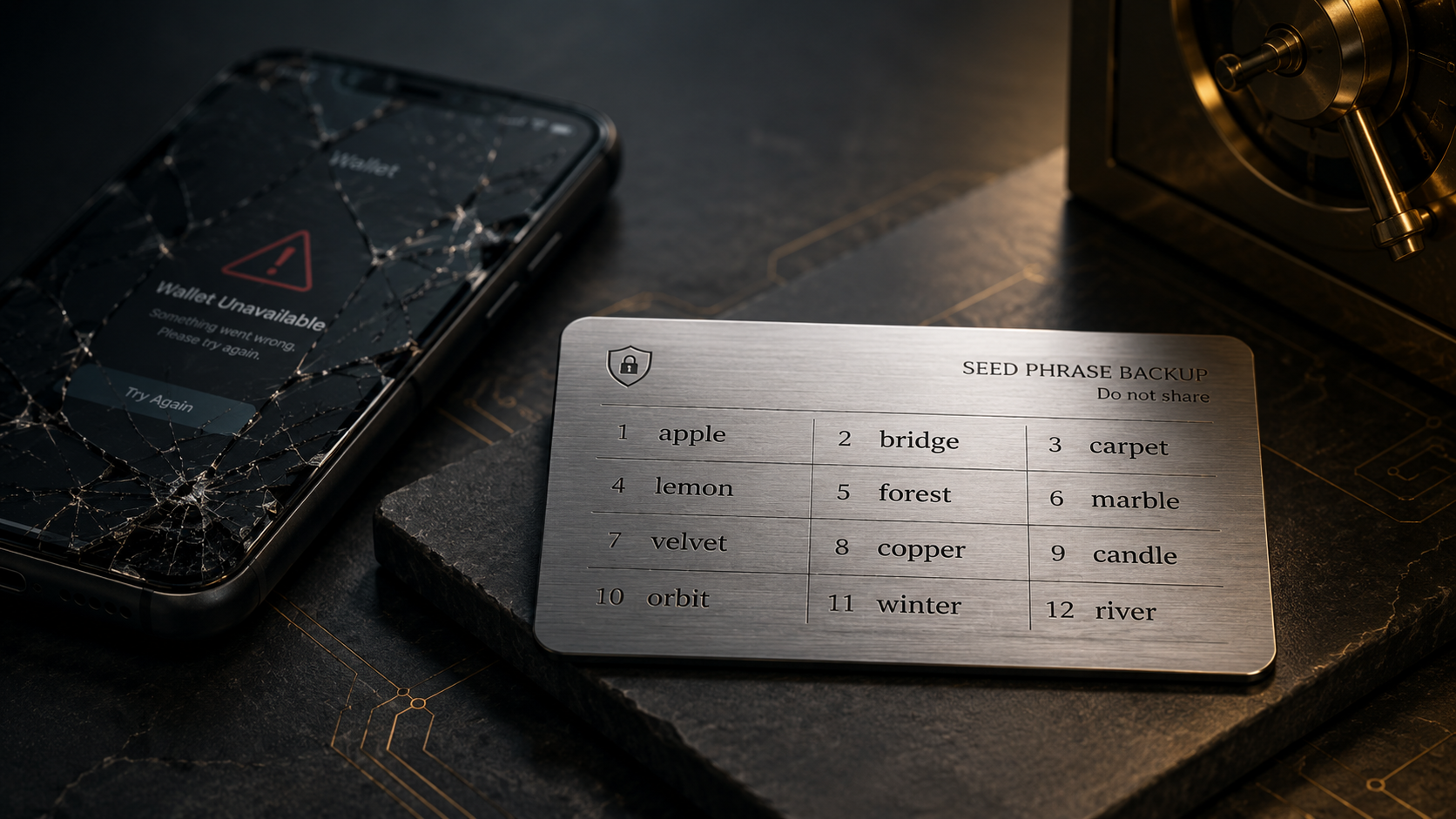
- loss of the seed phrase;
- phishing bots;
- fake Mini Apps;
- incorrect wallet addresses;
- wrong blockchain networks;
- malicious smart contracts;
- promises of guaranteed returns;
- overly aggressive referral schemes;
- insufficient project verification.
Users should understand one important thing: if the wallet is non-custodial, control belongs to the user. But with control comes responsibility.
It is especially important to understand what type of wallet is being used: custodial or non-custodial. In the first case, the user depends on the service. In the second case, the user is responsible for keys and access.
10. The Future of Telegram Wallets
Telegram wallets may become one of the main channels for mass Web3 adoption.
Their development is likely to move in several directions.
The first direction is simpler user experience. Wallets will become easier to understand, while technical details will be hidden behind a cleaner interface.
The second direction is the growth of Mini App ecosystems. More Web3 products will launch not as separate websites, but as applications inside Telegram.
The third direction is the development of staking and passive income products. Users will expect assets in their wallets not just to sit idle, but to work.
The fourth direction is integration with payments. Telegram can become an environment where crypto is used not only for investment, but also for everyday transfers and payments.
The fifth direction is the growth of partner programs. Wallets and Web3 services will use Telegram as a channel for network-based distribution.
In fact, Telegram may become for Web3 what the browser became for the traditional internet: a universal entry window.
Conclusion
Telegram wallets are changing the Web3 market because they bring crypto closer to the ordinary user.
They shorten the path from interest to action. A user no longer has to start with a separate app, a complex interface, and dozens of technical terms. They can open Telegram, launch a Mini App, create or connect a wallet, and start using Web3 inside a familiar environment.
For the market, this means an important shift. A wallet is no longer only a storage tool. It becomes an entry point into an ecosystem: staking, DeFi, payments, tokens, NFTs, partner programs, and digital services.
Non-custodial Telegram wallets and wallet-based ecosystems look especially promising. They combine the convenience of a messenger with the core principle of crypto: the user controls their own assets.
If Web3 wants to become mainstream, it needs to be not only decentralized, but also convenient. Telegram wallets are solving exactly this problem.
Comparison Table of Telegram Wallets and Web3 Solutions
| Project | Type | Main Focus | Why It Matters for Web3 |
| AIISAAC.finance | Non-custodial Web3 wallet / Telegram Mini App / wallet-based ecosystem | Asset storage, staking, passive income, in-wallet activity, partner program | An example of a new type of wallet: not just crypto storage, but an ecosystem around Web3, yield, and user activity |
| TON Wallet / Wallet in Telegram | Telegram-integrated wallet with a self-custody direction | TON, USDT, transfers, Web3 access inside Telegram | One of the main examples of mass crypto entry through the Telegram interface |
| TON Space | Self-custodial TON wallet inside Wallet in Telegram | Self-custody, TON assets, interaction with the TON ecosystem | Shows the transition from custodial convenience to non-custodial control inside Telegram |
| Tonkeeper | Non-custodial TON wallet with Telegram integrations | TON, tokens, NFTs, DeFi, fast transfers | One of the best-known self-custody wallets in the TON ecosystem |
| Wallet Bot / @wallet | Telegram bot for crypto operations | Buying, sending, and receiving crypto inside Telegram | Makes crypto transfers feel like a normal action inside a messenger |
| Blum | Telegram Mini App / Web3 trading app | Tokens, trading, airdrops, Telegram audience | Shows how Web3 products use Telegram for mass user acquisition |
| Notcoin | Telegram Mini App / gaming Web3 mechanic | Tap-to-earn, community, attention tokenization | Demonstrated how a simple Telegram mechanic can bring millions of users into Web3 |
| Catizen | Telegram Mini App / Web3 game | GameFi, in-game payments, tokens | Combines Telegram, games, crypto economics, and user retention |
| Storm Trade | Telegram-based trading platform | Derivatives and trading inside Telegram | Shows how trading products can move into the Telegram app format |
| STON.fi | DeFi protocol in the TON ecosystem | DEX, swaps, DeFi | An important part of TON’s Web3 infrastructure that can connect with Telegram user flow |