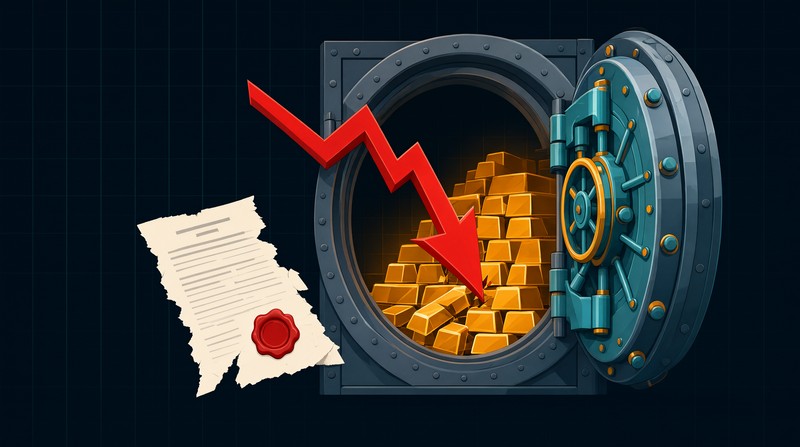
Gold went parabolic. A 65% surge in a single year is the kind of macro event that makes retail investors pop champagne and institutional macro funds print record bonuses. But inside the headquarters of the Argentine Central Bank (BCRA), the rally triggered a billion-dollar bleed. While the rest of the world bought the metal, Buenos Aires sold the upside.
In this article:
- The $1 Billion Hedging Trap
- The 2007 Legacy: Why the BCRA Uses Derivatives
- Forecasts & Consequences: The Sovereign Hangover
- FAQ
- The Market Always Wins
The $1 Billion Hedging Trap
The Auditor General of the Nation (AGN), Juan Manuel Olmos, just dropped a massive sovereign headache on the BCRA’s desk. A scathing official audit revealed that the central bank locked up a jaw-dropping 94% of Argentina’s physical gold reserves in complex derivative contracts [1].
The logic sounded bulletproof at the time. By using financial collars and put options, the bank aimed to insure the sovereign balance sheet against a sudden crash in spot prices. It was a defensive shield. Until the market ripped right through it. When gold tore past resistance levels and climbed 65%, those short derivative positions bled cash. The AGN flagged the losses at over $1 billion, attributing the disaster to a fundamental miscalculation of the metal’s price trajectory.
Central banks fighting macro trends rarely ends well. We tracked a similar policy collision when the US Treasury deployed its Exchange Stabilization Fund to backstop the Yen, and the market simply swallowed the intervention whole. The BCRA’s gold gamble follows the exact same bruising script. You cannot cap the upside of a global safe-haven asset during a liquidity crisis without paying a steep premium when the trend turns against you.

The 2007 Legacy: Why the BCRA Uses Derivatives
To be fair to the monetary architects in Buenos Aires, this is not a rogue trading desk gone wild. The BCRA defends these operations as a standard insurance mechanism that has been active since 2007 [2]. In years where gold corrects or trades sideways, these hedges protect the nation’s reserve value from sudden wipeouts.
But here is the kicker. The strategy inherently guarantees losses during super-cycles. By capping the upside to finance the downside protection, the central bank essentially wrote a massive call option to the global market. When institutional money flooded into precious metals to hedge against fiat debasement, the BCRA was left holding the bag. They recognized the losses, but the political and financial optics of bleeding a billion dollars while the asset sits in your own vault are brutal.
Forecasts & Consequences: The Sovereign Hangover
This is not just an accounting glitch. A $1 billion hole in the reserve management book carries real-world consequences for emerging market traders and local Argentine assets. Here is what we expect to see on the tape over the next two quarters:
- Country Risk Premium (Riesgo País) Expansion: Sovereign bondholders hate balance sheet surprises. Expect Argentine USD bonds (like the AL30 or GD30) to face selling pressure as the market prices in weaker net reserves. The country risk index will likely catch a bid, raising the cost of capital for local corporates.
- Pressure on Local Dollar Proxies: When the central bank’s reserve credibility takes a hit, the local market panics. We anticipate wider spreads between the official exchange rate and parallel dollar quotes (MEP and CCL), as locals rush to secure hard currency outside the BCRA’s reach.
- Global EM Contagion Audits: This audit will send a chill through other emerging market treasuries. Central banks from Latin America to Southeast Asia will likely audit their own derivative books. We foresee a structural rotation away from complex option collars back to plain-vanilla physical bullion or short-term US Treasuries.
For macro traders, this is a textbook signal. When a sovereign entity realizes losses on basic safe-haven assets, it usually precedes a wider repricing of that nation’s entire risk curve. The same dynamic played out when geopolitical supply shocks wiped trillions off US tech equities—markets ruthlessly punish structural vulnerabilities the moment they are exposed to daylight.
Frequently Asked Questions
Why did Argentina lose money on gold while the price went up?
The central bank used derivative contracts, such as put options and collars, to hedge against a price drop. These instruments require paying premiums or capping upside potential. When gold rallied 65%, the short positions in these derivatives generated massive mark-to-market losses, offsetting the gains on the physical metal.
How much of Argentina’s gold was involved in these trades?
According to the AGN audit led by Juan Manuel Olmos, the BCRA tied up approximately 94% of the country’s physical gold reserves in these derivative hedging operations, leaving almost no unencumbered bullion in the vaults.
Is the BCRA’s gold hedging strategy new?
No. The central bank defends the practice by stating these insurance operations have been in place since 2007. The strategy works during bear markets or sideways price action but structurally guarantees accounting losses during aggressive bull runs in the metal.
How will this affect the Argentine Peso and local markets?
Losses of this magnitude damage the credibility of the central bank’s net reserve figures. Historically, this leads to a spike in the sovereign risk premium and widens the gap between the official exchange rate and parallel dollar markets like the MEP or CCL, as locals price in the balance sheet hole.
The Market Always Wins
You can engineer a derivative, you can cap a price, and you can write a policy to ignore macro reality. But you cannot fight a 65% global trend and expect to keep your shirt. The AGN audit is a brutal reminder that complexity in sovereign reserve management often masks vulnerability rather than curing it. For traders watching the emerging market space, the BCRA’s billion-dollar tuition fee is a clear signal: when central banks bleed on safe havens, the broader sovereign risk curve is next on the chopping block. The tape never lies, and it always collects its debts.