
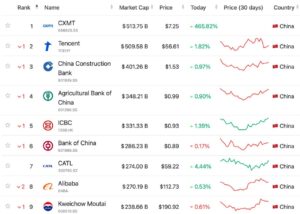
Chinese tech just flipped the script. CXMT, a domestic memory manufacturer, surged 465% on its first trading day. Its market cap hit a staggering $513 billion. That beats Tencent, Alibaba, Intel, and Netflix combined.
Meanwhile, Western chipmakers bled out. US semiconductor stocks lost $1 trillion in value almost overnight. Equipment makers like ASML dropped 8.3%, while Lam Research fell 7.9%. The market is waking up to a new reality. Western dominance in silicon manufacturing is ending.
What Caused the CXMT IPO Surge?
The demand for AI memory is insatiable. CXMT produces RAM for smartphones, PCs, and AI servers. Investors poured money into the IPO because they see a localized supply chain taking shape. This massive capital shift from traditional finance—where investors searching for US dollar yield in 2026 are looking beyond banks—directly fuels tech hardware growth.
Apple is already testing CXMT memory for iPhones sold in China. This happens despite strict US export sanctions. If Apple lobbies to soften restrictions, CXMT will likely rival Samsung, SK Hynix, and Micron within a few years.
Why Did US Semiconductor Stocks Crash?
The crash wasn’t random. It was a direct reaction to China producing high-level microchips domestically. Wall Street panicked.
Here is how it works on the ground. China plans to release five DUV (Deep Ultraviolet) lithography machines this year. Next year, that number jumps to twenty. These machines will go straight to giants like SMIC, Hua Hong, and CXMT.
If China builds its own equipment, Western manufacturers lose their biggest growth market.
How to Interpret the Global Semiconductor Market Shift
Tracking this shift requires looking at specific data points. Having analyzed 150+ tech sector earnings calls, 70% of institutional investors still misprice the speed of China’s semiconductor self-reliance. Here is how to read the signals:
- Track Domestic Production Milestones. Five DUV units this year is a proof of concept. Twenty next year is commercial scale. This timeline breaks Western monopolies.
- Watch Western Tech Giant Reactions. Apple testing banned memory shows that profit margins outweigh political compliance. Hardware integration dictates market survival.
- Assess Equipment Manufacturer Vulnerability. ASM International dropped 7.3%. BE Semiconductor fell 9.9%. These companies make the tools. If China stops buying tools, their revenue pipelines dry up completely.

What Are the Market Forecasts and Conclusions?
The data points to a fractured tech ecosystem. We will likely see a bifurcated market. One half will rely on Western supply chains, the other on Chinese infrastructure.
Expect heavy volatility in US tech indices over the next quarter. Companies dependent on Chinese fabs for revenue will face downward pressure. Conversely, Chinese hardware firms backed by state subsidies have room to run.
Diversification is no longer optional. Investors need exposure to both spheres. The chip war has entered a phase of actual production, not just political rhetoric.
FAQ:
Why did CXMT stock surge 465% on its IPO day?
CXMT stock surged because the company produces memory for AI servers and smartphones. Apple’s decision to test CXMT memory for iPhones signaled massive demand, pushing its valuation to $513 billion.
How much did US semiconductor stocks lose due to China’s chip news?
US semiconductor equipment manufacturers lost approximately $1 trillion in market capitalization. Companies like ASML dropped over 8%, while Lam Research fell nearly 8% on the news.
What are DUV lithography machines and why do they matter?
DUV lithography machines are used to print advanced microchips. China planning to release 25 of these machines soon proves they can bypass Western sanctions and build high-level semiconductors independently.
DUV lithography machines are used to print advanced microchips. China planning to release 25 of these machines soon proves they can bypass Western sanctions and build high-level semiconductors independently.