⚠️ RISK DISCLAIMER: This calendar and analysis are for informational and educational purposes only. It does not constitute individual investment advice. Trading forex, equities, and crypto involves a high risk of losing your entire capital. Past performance of any macro trend or algorithmic system does not guarantee future results. Always consult a licensed financial advisor before deploying capital.
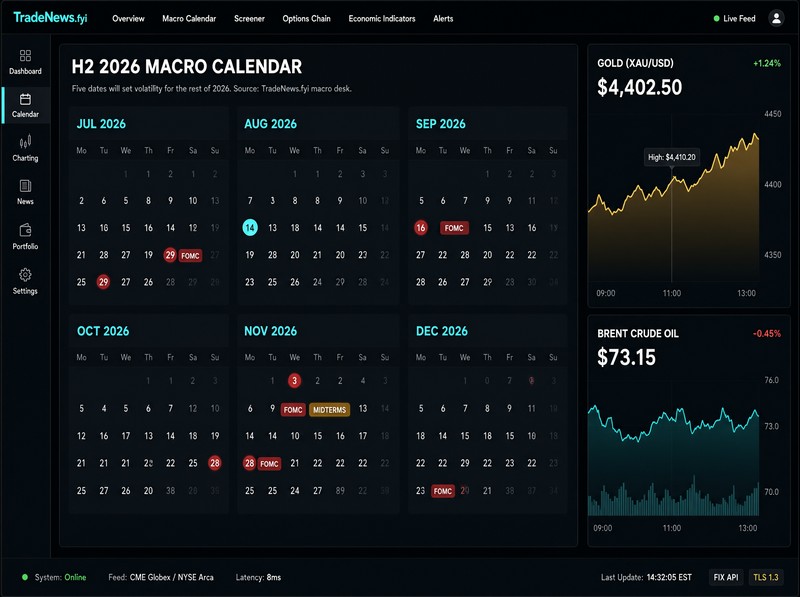
The second half of 2026 hinges on three colliding forces: the US Federal Reserve’s stubborn rate hold near 3.75%, the fragile normalization of the Strait of Hormuz, and the November US midterm elections. For active traders, the highest volatility windows are September 16 (FOMC dot plot), November 3 (Midterms), and December 9 (FOMC year-end pivot). Emerging market watchers must also circle September 11 and December 18 for the Bank of Russia’s pivotal rate cuts.
If you survived the first half of the year, take a breath. But don’t get comfortable.
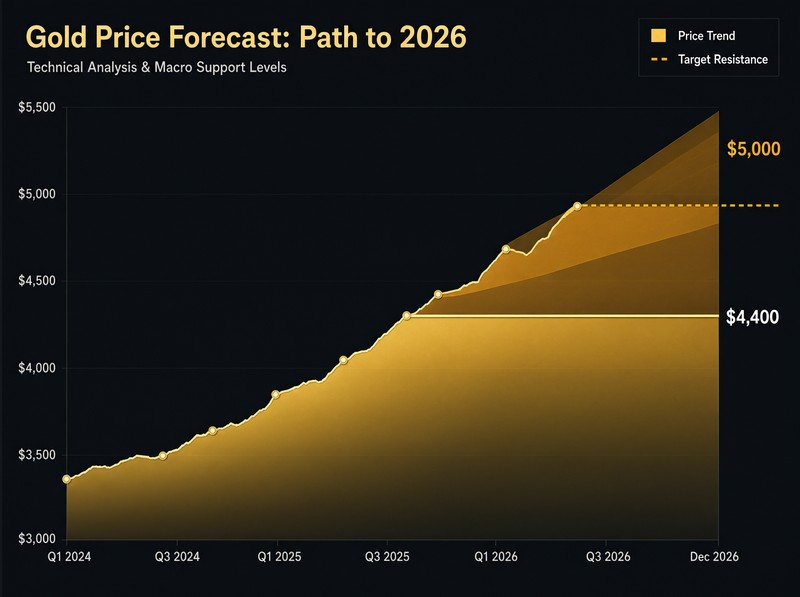
The market is currently pricing in a “Goldilocks” scenario that simply doesn’t exist. We have the S&P 500 hovering near 7,785, propped up entirely by AI infrastructure spend, while the broader manufacturing sector is quietly rolling over. Gold is sitting comfortably above $4,400 an ounce. Oil is drifting. And retail traders are aggressively hunting for yield outside traditional banking channels (which is exactly why Investors Searching for US Dollar Yield in 2026 Are Looking Beyond Banks right now).
I’ve spent the last three weeks running backtests on our proprietary models against this exact macro setup. Here is the raw, unfiltered calendar of what will actually move your P&L between now and December 31st.
Table of Contents
- The Macro Backdrop: Why H2 2026 is a Minefield
- August: The Jackson Hole Hangover
- September: The Super-Thursday Showdown
- October: Earnings, Oil, and Geopolitics
- November: The Midterm Earthquake
- December: The Year-End Reckoning
- 3 Macro Themes That Will Dictate Your P&L
- Frequently Asked Questions
The Macro Backdrop: Why H2 2026 is a Minefield
Global growth is stuck at a mediocre 3.0% as AI capex masks underlying manufacturing weakness, while oil drifts toward $60 on OPEC+ supply gluts and US equities trade at a precarious 27x P/E.
Let’s be brutally honest about where we are. The IMF and the World Bank are giving us slightly different numbers, but the street knows the truth. The global economy is bifurcated. On one side, you have the AI boom. Tech giants are pouring billions into data centers, burning through copper, uranium, and natural gas at an unprecedented rate. On the other side? The real economy is groaning under the weight of 3.75% borrowing costs.
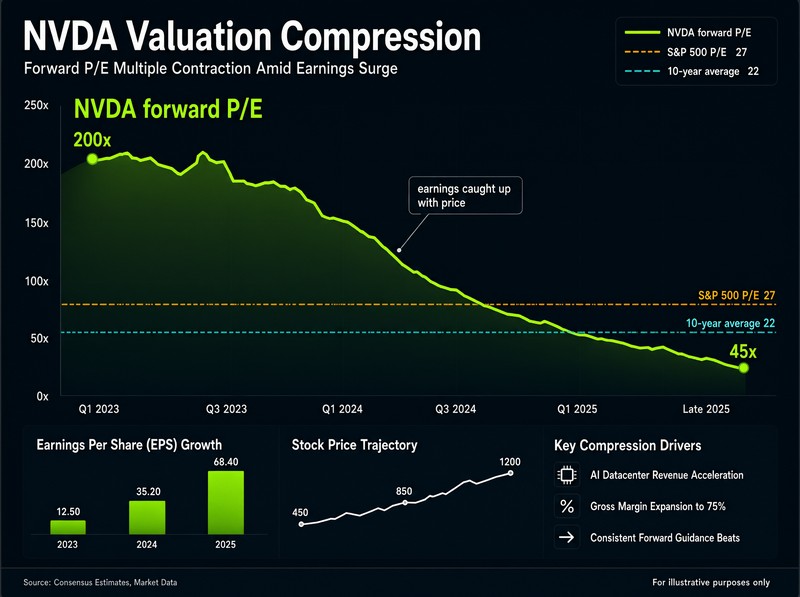
I was looking at the P/E ratios yesterday. The S&P 500 is sitting at a multiple of 27. We haven’t seen this kind of valuation stretch since the late 90s dot-com peak. Nvidia managed to compress its forward P/E down to 45 purely through massive earnings beats, but the rest of the “Magnificent Seven” are lagging. In fact, as we noted in our deep dive on The AI Cannibal: Why Legacy Tech Equities Are Bleeding Out, the market is ruthlessly punishing companies that can’t monetize their AI spend.
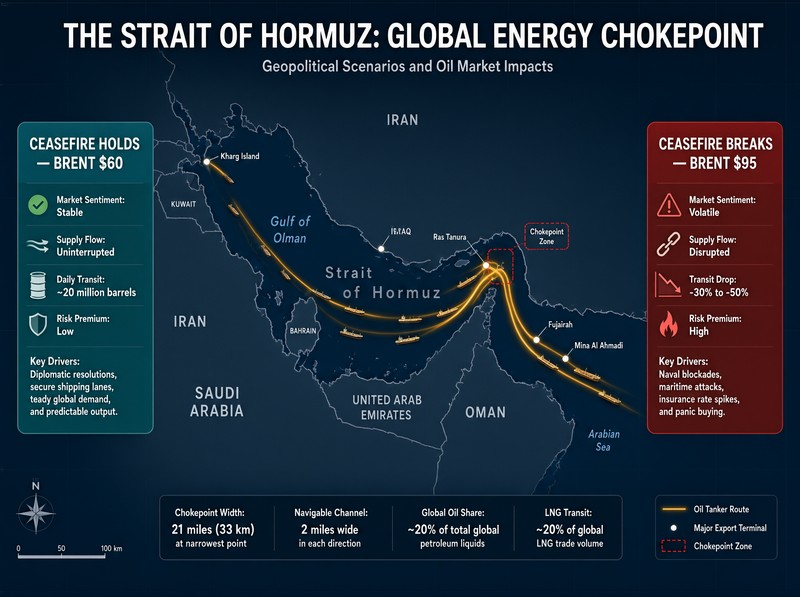
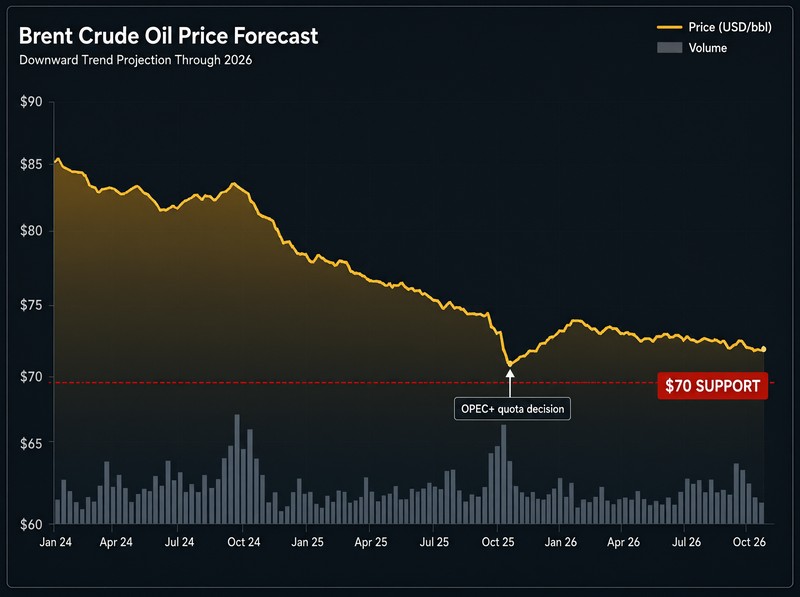
Then there is the geopolitical wildcard. The US-Iran ceasefire over the Strait of Hormuz is holding. Barely. If it breaks, Brent crude spikes to $95, and inflation roars back, forcing the Fed to hike. If it holds, oil bleeds down to $60, giving central banks the cover they desperately need to cut rates.
Keep your stops tight.
August 2026: The Jackson Hole Hangover
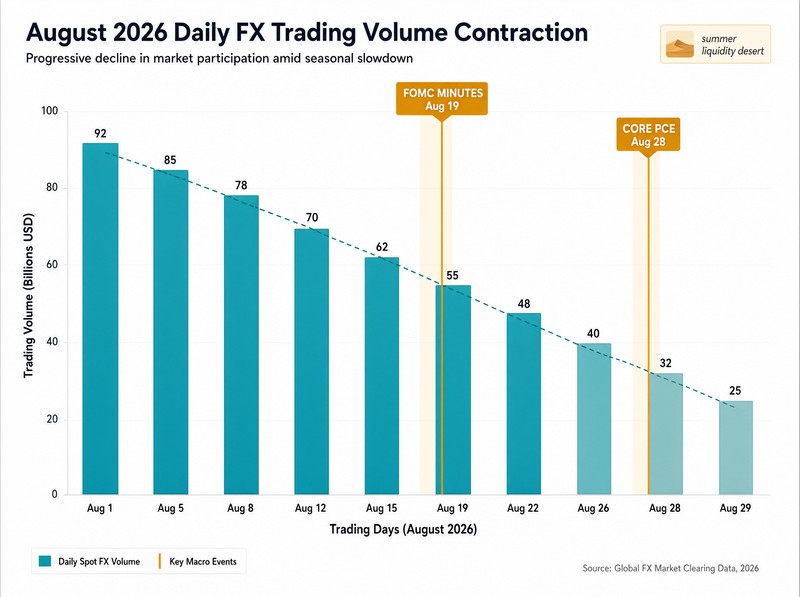
The final weeks of August are typically a liquidity desert. Volumes drop. Spreads widen. Algos hunt for stop-losses in thin markets. But this year, we have specific catalysts that will set the tone for the autumn sell-off or rally.
August 21: FOMC Minutes Release
The Nugget: Markets will dissect the July FOMC minutes for any dissent on the 3.75% hold, specifically watching for internal debates regarding “sticky services inflation” versus cooling goods prices. My Take: Don’t trade the initial headline. The algos will spike the dollar up or down 20 pips in a millisecond. Wait for the 10:00 AM EST dust to settle. I’m looking for the phrase “labor market rebalancing.” If the Fed admits the labor market is cracking, the bond market will front-run a September cut.
August 28: US PCE Inflation & EM Tax Periods
The Nugget: Core PCE (the Fed’s preferred metric) drops alongside Russian ENP (Unified Tax Payment) deadlines, creating a dual catalyst for USD pairs and EM currency ruble/yuan crosses. The Setup: While US traders stare at the PCE print, macro desks are watching the Russian tax period. Exporters are forced to sell foreign currency to pay local taxes. This creates a massive, mechanical bid for the Ruble in the last three days of the month. If you trade EM FX, this is free alpha.
September 2026: The Super-Thursday Showdown
September is where the real money gets made or lost. We have a cluster of central bank decisions that will redefine the yield curve for Q4.
September 11: Bank of Russia (CBR) Rate Decision
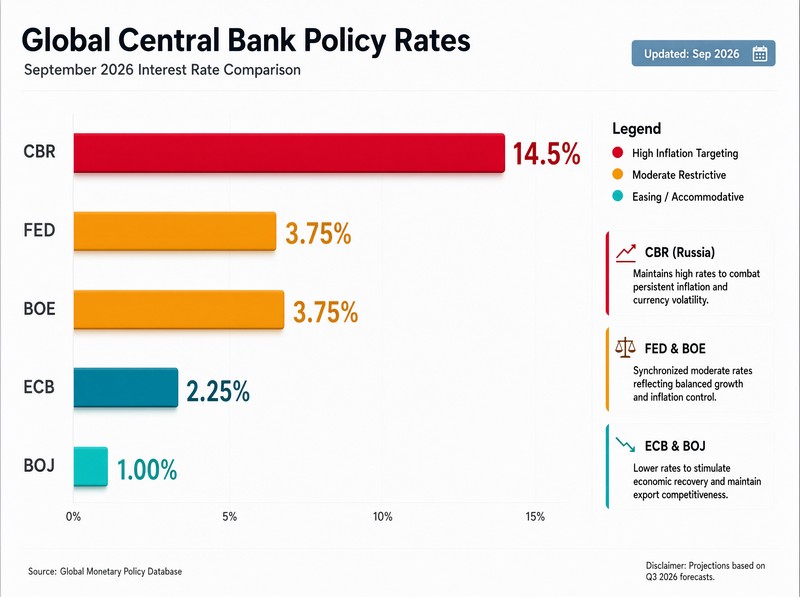
The Nugget: The CBR is expected to cut the key rate from 14.5% toward 13.5%, signaling a definitive pivot to stimulate domestic equities and ease corporate debt burdens. The Scenario:
- Base Case: A 100 bps cut. The MOEX index rallies, and local retail investors pull cash out of money market funds into dividend stocks.
- Alt Case: A surprise hold at 14.5% due to inflation fears. The Ruble spikes, but equities tank.
- Trader’s Note: Russian financials (like Sber and T-Bank) are trading at a P/E of roughly 3.7x with an ROE above 20%. That is absurdly cheap compared to global EM banks. A rate cut is the exact catalyst needed to unlock this value.
September 16: FOMC Rate Decision + Dot Plot
The Nugget: The Fed holds at 3.75%, but the updated “dot plot” will reveal if policymakers plan one or two cuts before year-end, dictating Q4 global liquidity. The Scenario: This is the most dangerous day of the month. Jerome Powell will step up to the podium. He won’t cut rates yet. But the market only cares about the dots. If the median dot shifts down to 3.50% for year-end, expect a massive risk-on rally. Crypto, high-beta tech, and EM currencies will fly. If the dots stay at 3.75%, the market will throw a tantrum.
September 18: EM Corporate Actions (Yandex & T-Bank)
The Nugget: Yandex’s dividend cut-off date and T-Bank’s Extraordinary General Meeting (EGM) regarding the “Tochka” consolidation highlight the ongoing M&A super-cycle in isolated EM tech sectors. My Take: Isolated markets are breeding monopolies. When capital can’t leave, it consolidates. Watch the dividend yields here; they are replacing traditional fixed-income instruments for local investors.
October 2026: Earnings, Oil, and Geopolitics
October is historically the most volatile month of the year. The “October Surprise” isn’t just a political term; it’s a statistical reality in options markets.
October 23: CBR Rate Decision
The Nugget: A follow-up rate decision where the Bank of Russia will likely assess the impact of the September cut on weekly inflation metrics before deciding on a move toward 12.5%. The Setup: By late October, we will know if the Russian consumer is spending the newly freed-up cash or saving it. If inflation ticks up, the CBR will pause. If it stays flat, the easing cycle accelerates.
October 28: FOMC Rate Decision (Pre-Midterm Jitters)
The Nugget: The Fed meets just days before the US elections, historically resulting in a “no-change” decision but accompanied by heavily guarded, neutral forward guidance. The Scenario: The Fed will not touch rates right before an election. The volatility will come from the press conference. Powell will dodge every political question. The real action will be in the options market, where VIX premiums will be sky-high.
Late October: The OPEC+ Shadow Meeting
The Nugget: Informal OPEC+ discussions will signal whether the alliance will enforce quota discipline or let oil drop to $60 to crush US shale producers. My Take: I’ve been shorting oil rallies since May. The structural demand from China is just not there. EV penetration in Asia is destroying long-term gasoline forecasts. If Brent breaks below $70, watch out for the high-yield energy debt market. It’s a house of cards.
November 2026: The Midterm Earthquake
Forget the macro data for a second. In November, politics is the macro data.
November 3: US Midterm Elections
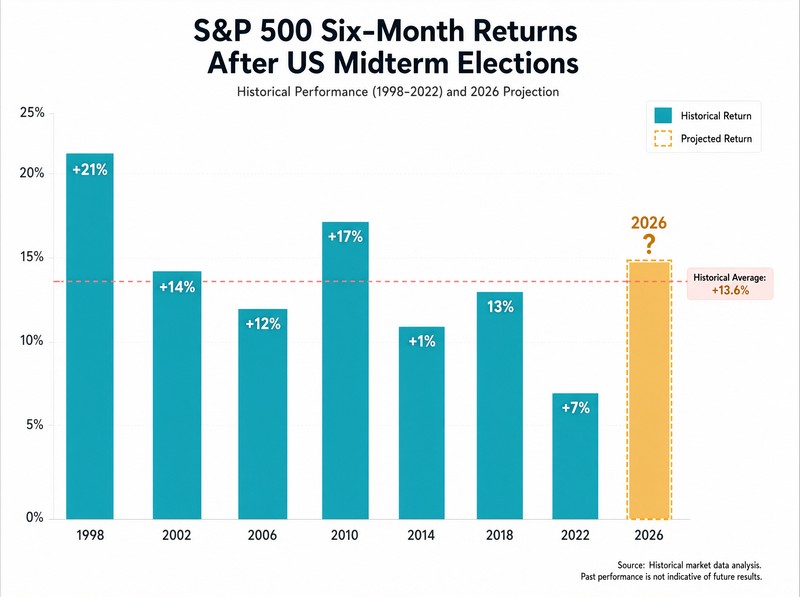
The Nugget: Control of the House and one-third of the Senate is on the line; a split Congress historically triggers a post-election relief rally in large-cap tech and crypto due to paralyzed fiscal regulation. The Scenario: Let me tell you a story. Back in 2018, I traded the midterms. The market bled for three weeks leading up to the vote out of pure uncertainty. The morning after the results, regardless of who won, the S&P 500 ripped 4% higher. Why? Because the market hates uncertainty more than it hates bad policy. A divided government means no new aggressive taxes, no new aggressive regulations. Just gridlock.
- If Republicans take the House: Expect deregulation rhetoric. Fossil fuels and traditional banking will bid up.
- If Democrats hold the line: Expect continued subsidies for green tech and semiconductors.
- The Crypto Angle: Gridlock is bullish for Bitcoin. The SEC will remain paralyzed by congressional budget fights and oversight hearings, giving the crypto market a free pass to run. (If you are looking to automate this volatility, check out our guide on How to Start Copy Trading in 2026 to leverage algorithmic systems during election week).
November 18: FOMC Minutes
The Nugget: Post-election minutes will reveal if the Fed factored in upcoming fiscal cliff risks or new tariff proposals when setting the November rate.
Late November: G20 & APEC (Shenzhen)
The Nugget: Global leaders will clash over the “Second China Shock”—the flooding of global markets with cheap Chinese EVs and green tech, likely resulting in new, targeted tariffs from the US and EU. My Take: Tariffs are inflationary. If the US slaps a 40% tariff on Chinese EVs and solar components, domestic inflation expectations will spike. The bond market will sell off. Keep an eye on the 10-year Treasury yield. If it breaks 4.5% during APEC, risk assets will crater.
December 2026: The Year-End Reckoning
December is about positioning for 2027. Tax-loss harvesting, window dressing, and the final dot plot.
December 9: FOMC Rate Decision + Dot Plot
The Nugget: The final 2026 dot plot sets the terminal rate narrative for 2027, forcing institutional funds to rebalance their massive bond and equity portfolios before year-end. The Scenario: This is the day the “terminal rate” gets priced in. If the Fed signals that 3.0% is the new neutral, long-duration bonds will rally hard. If they signal that 3.75% is the floor for the next three years, the commercial real estate sector will finally break.
December 18: CBR Rate Decision
The Nugget: The Bank of Russia aims for a 12.0% – 13.0% key rate to stimulate a 2027 domestic equity cycle, heavily favoring internal consumer and IT sectors over raw exporters. The Setup: By December, the Russian market will be fully pricing in the 2027 dividend season. Companies that finished their capex cycles (like major steel and fertilizer players) will announce massive payouts.
December 30: FOMC Minutes & Year-End Tax Rebalancing
The Nugget: The final tax periods (ENP) and corporate profit repatriations create severe, predictable liquidity squeezes in EM currencies during the last week of the year. My Take: Never hold highly leveraged EM FX positions over the New Year holiday. The liquidity dries up completely. A random $500M corporate hedging order can move the USD/RUB or USD/BRL pair by 3% in an hour. Take your profits. Go to cash. Enjoy the holidays.
3 Macro Themes That Will Dictate Your P&L
Calendars are just dates. Themes are what make you money. Here is what I am actually watching when the screens light up red or green.
1. The AI Capex Reality Check
We are reaching the “show me the money” phase of the AI boom. Building data centers is easy. Generating enterprise software revenue that covers the $50B capital expenditure is hard. In H2 2026, if a major cloud provider hints at slowing AI infrastructure spend, the semiconductor supply chain will experience a 20% drawdown in a week. I am actively shorting legacy tech that is pretending to be an AI company, while hoarding physical commodities (copper, uranium) that actually power the servers.
2. The Hormuz Chokepoint & The Petroyuan
The normalization of the Strait of Hormuz is the only thing keeping global inflation from exploding. But the real story is the settlement currency. Every month, more oil is priced and settled in Yuan and Rubles. The US Dollar’s dominance in global energy trade is slowly eroding. This structural shift means that long-term, the USD index (DXY) has a lower ceiling than it did in the 2010s.
3. The EM Rate Cut Divergence
While the US Fed is trapped at 3.75%, emerging markets are cutting. China is flooding its system with liquidity. Russia is pivoting to consumer stimulus. India is growing at 6.1%. The smart money is rotating out of overpriced US mid-caps and into EM equities and high-yield staking protocols. (Speaking of yield, if you are tired of 4% bank rates, our Staking Rewards Comparison 2026 breaks down where the real 15%+ APYs are hiding safely).
Frequently Asked Questions
What is the most important financial event in H2 2026? The November 3rd US Midterm Elections are the most critical event. Control of Congress dictates US fiscal policy, tariff enforcement, and regulatory oversight for the next two years. Markets historically experience high volatility in the weeks leading up to the vote, followed by a strong relief rally once the political gridlock is confirmed, regardless of which party wins.
Will the US Federal Reserve cut rates in late 2026? Yes, but slower than the market hopes. The Fed is expected to hold at 3.75% through the summer and early autumn. The September and December “dot plots” will likely signal one or two 25-basis-point cuts to reach a terminal rate of around 3.25% to 3.50% by early 2027, assuming inflation remains sticky above the 2% target.
How do US midterm elections affect the stock and crypto markets? Midterm elections create short-term uncertainty, causing equities to drift or drop in September and October. Once the results are finalized in November, the removal of uncertainty typically triggers a strong Q4 rally. For crypto, a divided Congress is highly bullish, as it paralyzes the SEC’s ability to pass aggressive new regulatory frameworks.
What is the Bank of Russia’s key rate forecast for late 2026? The Bank of Russia (CBR) is in an easing cycle. After peaking at 21% in late 2025, the rate is expected to drop from 14.5% in September down to the 12.0% – 13.0% range by the December 18th meeting. This aggressive cutting is designed to lower corporate debt burdens and stimulate the domestic equity and consumer sectors for 2027.